Tea
James Tissot
€39,90
Select sizeSize guide
- 380g/m² cotton canvas — certified museum quality
- Solid wood stretcher bar with 0.75” gallery wrap
- HD Giclée print — colour-true to the original
- Ready to hang — hanging hardware included
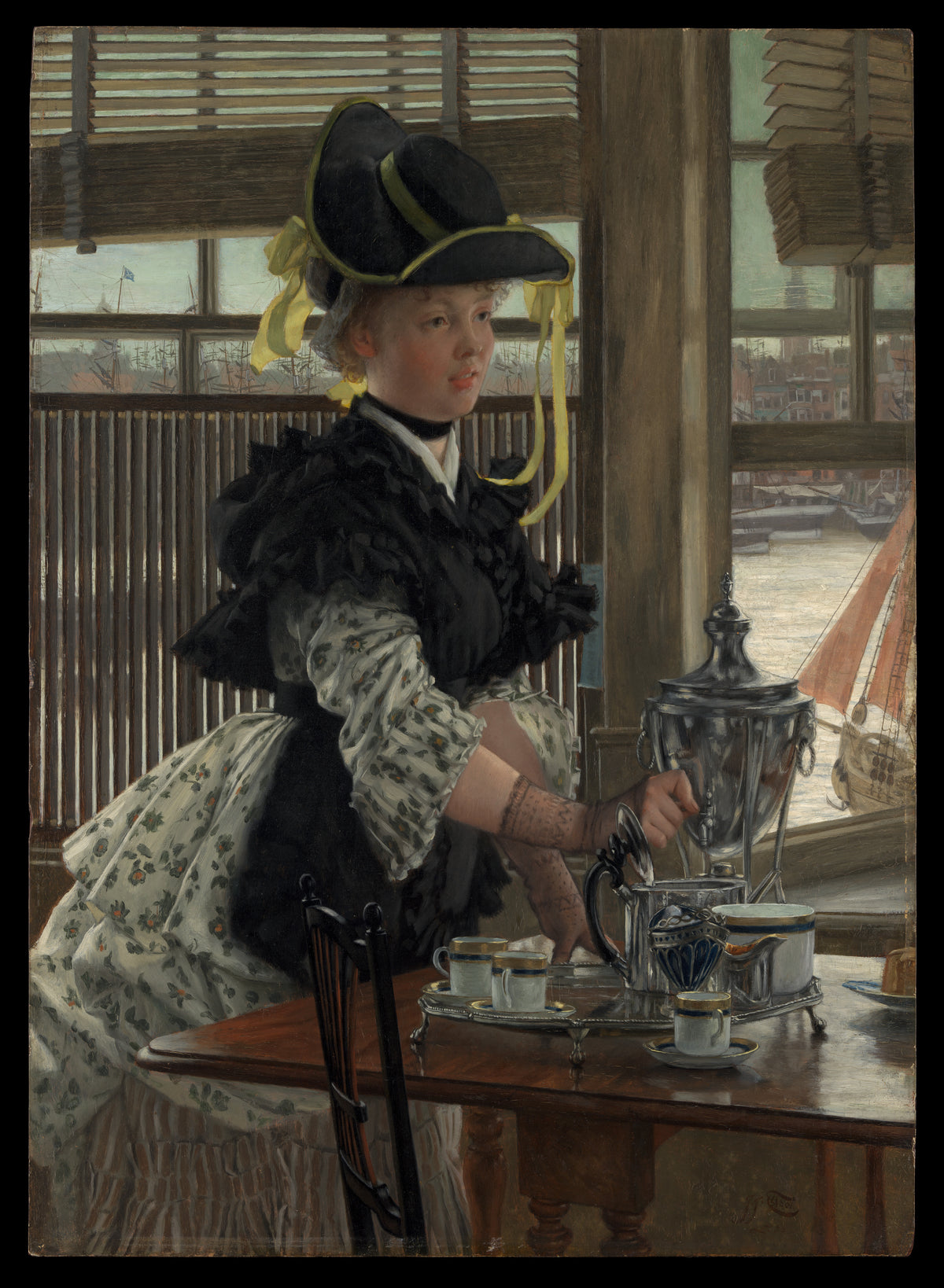
Tea, painted in 1872 by the Franco-British artist James Tissot, is a masterwork of Victorian-era social observation rendered with extraordinary technical refinement. Executed in oil on wood, the painting captures an intimate domestic scene centered on the ritual of afternoon tea — a cornerstone of upper-class British social life in the nineteenth century. Tissot, who had recently settled in London after the turmoil of the Paris Commune, channeled his outsider's eye into meticulous depictions of fashionable English society, and this work exemplifies that keen, celebratory scrutiny.
The composition reveals Tissot's debt to both Realist tradition and the influence of Japanese aesthetics, evident in his careful attention to decorative objects, textiles, and the play of light across surfaces. The figure's elegant pose and lavish costume speak to themes of leisure, femininity, and bourgeois refinement, while the precise rendering of porcelain and fabric underscores the artist's remarkable virtuosity. The work is held in the permanent collection of The Metropolitan Museum of Art, New York, where it stands as a testament to Tissot's unique position bridging French and English artistic cultures.
This museum-quality stretched canvas reproduction is printed on premium matte canvas and hand-wrapped around a solid 0.75-inch wooden frame with a classic gallery wrap finish — ready to hang and built to last for generations.
| Artist | James Tissot |
| Year | 1872 |
| Medium | Oil on wood |
| Dimensions | 26 x 18 7/8 in. (66 x 47.9 cm) |
| Collection | The Metropolitan Museum of Art, New York |
| Movement | Realism |